Chop&Savor®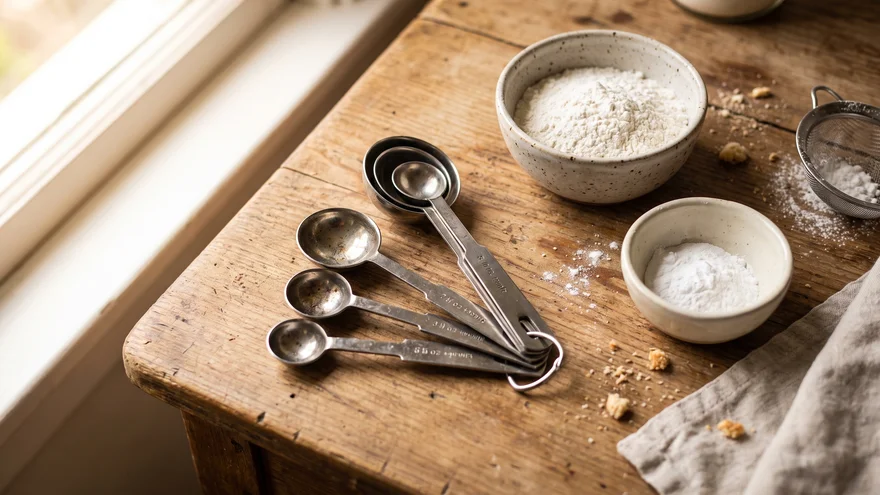
You followed an Australian baking recipe perfectly, measured every ingredient twice, and yet your cake still came out entirely flat. The culprit causing your baking failure is likely sitting right inside your utensil drawer. Measuring spoons are not standardized globally, and using an American spoon for an Australian recipe creates a massive chemical imbalance in your dough.
| Region | Standard Tablespoon Volume | Teaspoons per Tablespoon |
|---|---|---|
| USA & Canada | 15 mL | 3 teaspoons |
| UK & New Zealand | 15 mL | 3 teaspoons |
| Australia | 20 mL | 4 teaspoons |
The 20ml Australian Anomaly: Why Your Spoons Don't Match
If you buy a measuring spoon set in the United States, Canada, or the United Kingdom, the tablespoon holds exactly 15 mL. The US customary measurement is technically 14.787 mL (exactly 1/2 US fluid ounce), but the FDA rounds this to a clean 15 mL for nutrition labeling. The modern UK metric tablespoon is also 15 mL, a slight bump up from their historical pre-metric size of 14.2 mL.
Australia does things completely differently. An Australian tablespoon holds exactly 20 mL.
This size gap creates chaos for home cooks trying to follow international recipes. A 20 mL Australian spoon is 33 percent larger than the standard 15 mL spoon used by the rest of the world. Going the other direction, measuring an Australian recipe with a 15 mL US spoon leaves you with a 25 percent shortfall of whatever ingredient you just scooped.
The 1970s Metric Conversion Board Decision
This discrepancy is not a historical accident. During the 1970s, the Australian Metric Conversion Board purposefully set their official tablespoon definition to 20 mL. They wanted a size that neatly equaled exactly four metric teaspoons.
To make matters worse, modern globalization has blurred the lines inside Australia itself. Baking expert Anneka Manning notes that Australian kitchenware stores routinely import and sell 15 mL measuring spoons. This means many Australian cooks are unknowingly using the wrong spoon for their own country's recipes.
Teaspoons: The Universal Kitchen Escape Hatch
If you are cooking from an international blog and panicking about spoon sizes, you have a universal escape hatch: the teaspoon.
The teaspoon is the single unit of volume measurement that does not vary meaningfully across borders. A metric teaspoon is exactly 5 mL. The US customary teaspoon is 4.93 mL, which is functionally identical in a home kitchen.
Because the teaspoon is universal, you can easily adapt any recipe by remembering one simple rule. Everywhere in the world, 1 tablespoon equals 3 teaspoons. In Australia, 1 tablespoon equals 4 teaspoons.
Older British and Australian recipes also occasionally call for a dessertspoon. This measure sits right between the two, holding exactly 10 mL.
When the 5ml Difference Actually Ruins a Recipe
Not every ingredient requires mathematical precision. Knowing when to stress about the tablespoon gap saves you unnecessary anxiety in the kitchen.
Leaveners and Gelatin (High Risk)
A 25 to 33 percent volume error is catastrophic for concentrated chemical ingredients. Baking powder, baking soda, active dry yeast, gelatin, and strong spices rely on exact ratios to work properly.
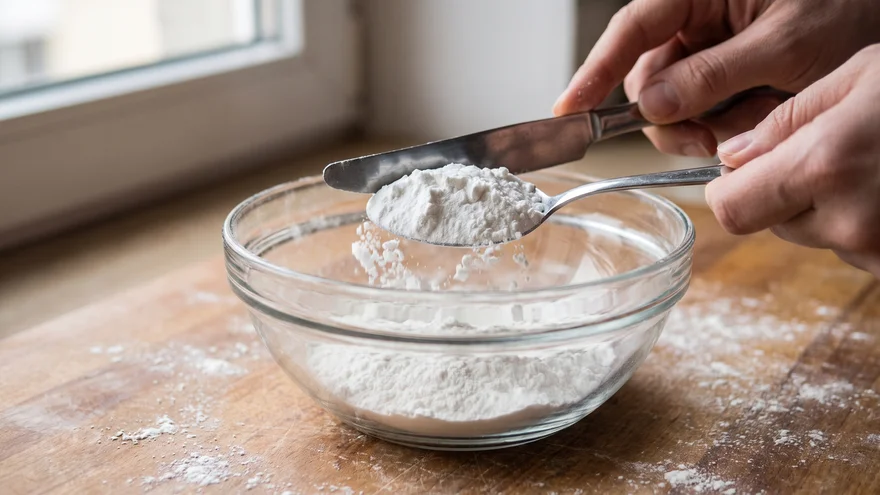
If you use a 15 mL US spoon to measure baking powder for an Australian recipe, your batter will lack the lift needed to rise. If you use a 20 mL Australian spoon for an American recipe, you will overdose the dough with baking soda and leave a bitter, soapy aftertaste in your cookies. Always measure these high-risk ingredients using the 5 mL teaspoon trick or weigh them with a digital scale.
Bulk Liquids (Low Risk)
You do not need to convert tablespoons for bulk ingredients. If a soup recipe calls for two tablespoons of olive oil or three tablespoons of milk, using a slightly smaller or larger spoon will not change the final dish. The error is proportionally tiny against the large total volume of the meal.
Measuring Cups: Does the 10ml US vs Metric Gap Matter?
The international measurement gap extends to cups, though the impact is far less destructive.
A US customary cup holds 236.588 mL, which most modern American recipes round up to 240 mL. The standard metric cup used in Australia, New Zealand, and Canada holds 250 mL. The historical UK imperial cup is even larger at 284.131 mL, though most modern British recipes have completely abandoned volume measurements in favor of weighing ingredients on a scale.
For most recipes, the 10 mL difference between a US cup and a metric cup is too small to ruin a batter. If you are baking something incredibly delicate and want to be perfectly precise, cookbook author Nigella Lawson suggests a simple fix. Just remove 2 teaspoons of flour or liquid from your 250 mL metric cup to match the US standard. Her own published books strictly use the 15 mL tablespoon and the standard US cup volume.
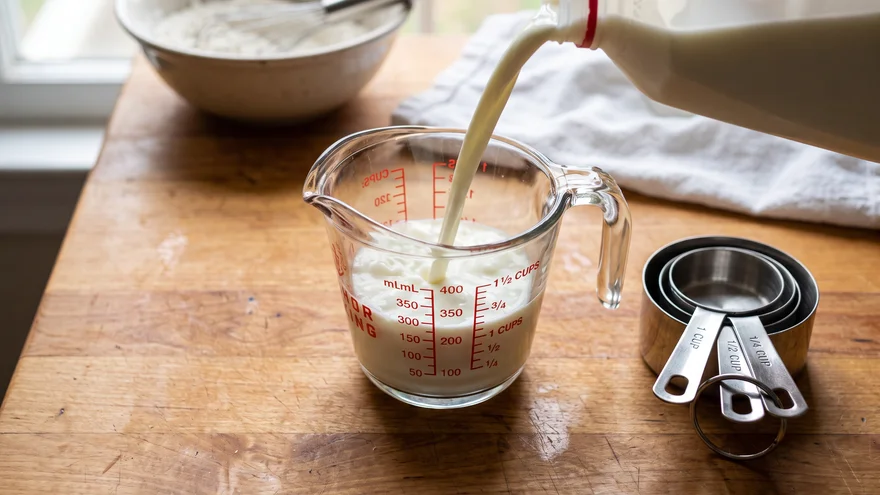
Standard US Tablespoon Conversions (The 15ml Rule)
When you are cooking entirely within the US customary system, the math is rigid and predictable. The rule that "16 tablespoons make a cup" only works perfectly if you are using a 15 mL spoon and a 240 mL cup.
Keep this standard US conversion list handy for scaling your everyday recipes up or down:
- 1 cup = 16 tablespoons
- 3/4 cup = 12 tablespoons
- 1/2 cup = 8 tablespoons
- 1/3 cup = 5 1/3 tablespoons
- 1/4 cup = 4 tablespoons
- 1/8 cup = 2 tablespoons
- 1 tablespoon = 3 teaspoons
- 1 pound = 16 ounces
Spoon size is not the only conversion that trips up an international recipe. If the same recipe also lists its oven setting in Celsius or gas mark, checking an oven temperature conversion chart before you preheat is just as important, since a mismatched oven can undo an otherwise perfect spoon measurement.
The next time you find a gorgeous recipe from an overseas food blog, check the author's location before you start scooping baking soda. Grabbing your 5 mL teaspoon instead of your tablespoon might be the one step that finally saves your cake from sinking.