 Chop&Savor®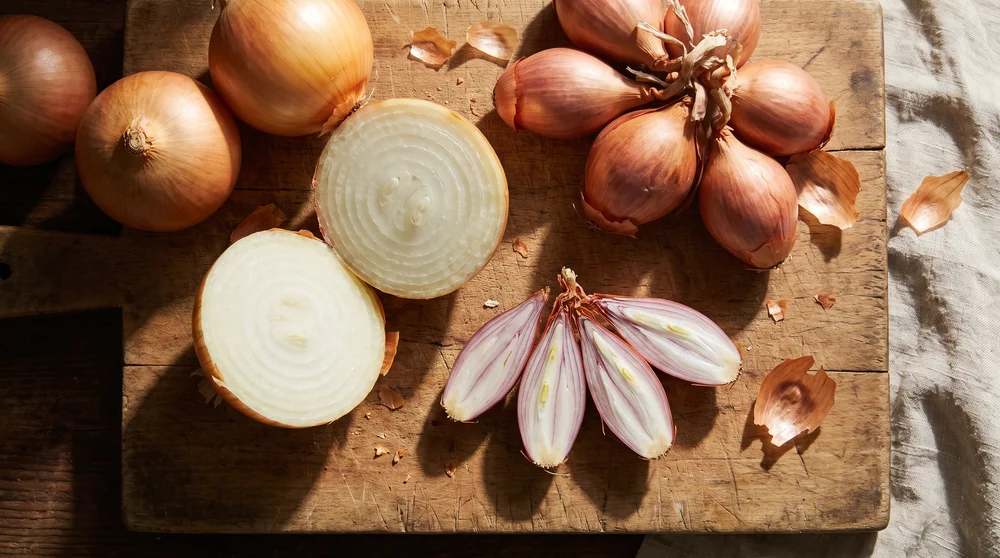
You are staring at a pan sauce recipe that calls for a minced shallot, and all you have on the counter is a large yellow onion. Before you start chopping, you need to know if making that swap will ruin dinner. The short answer is yes, you can substitute them, but you must adjust the quantity and prep method based on whether the dish is raw or cooked.
| Feature | Shallots | Onions |
|---|---|---|
| Flavor Profile | Mild, sweet, subtle hint of garlic | Sharp, pungent, strongly savory |
| Best For | Vinaigrettes, pan sauces, raw garnishes | Soups, roasts, caramelized bases |
| Cook Time | Fast melting | Requires longer cooking to soften |
| Raw Swap Fix | Use as is | Soak onion in ice water for 10 minutes |
The Core Differences You Actually Need to Know
Flavor Profile: Sweetness vs. The "Bite"
Shallots deliver a refined, delicate flavor that tastes like a cross between a sweet onion and a very mild clove of garlic. They lack the intense, eye-watering pungency of standard white or yellow onions. When you bite into a raw onion in a salad, that sharp sulfur flavor often takes over the entire palate.
Shallots give you the savory depth of an allium without the lingering, aggressive burn.
Physical Structure: Why Shallots Melt Faster
Cut open an onion, and you will find a single, continuous bulb of thick, watery layers. Cut open a shallot, and you will find it grows in clusters of 2 or more oblong cloves, structurally similar to garlic. The layers inside these cloves are incredibly fine and thin.
Because their layers are exceptionally thin, shallots break down and melt into pan sauces much faster than thick-cut onions. This is exactly why restaurant chefs rely on them for quick reduction sauces.
Can You Substitute Onions for Shallots?
Swapping in Raw Dishes (The Ice Water Trick)
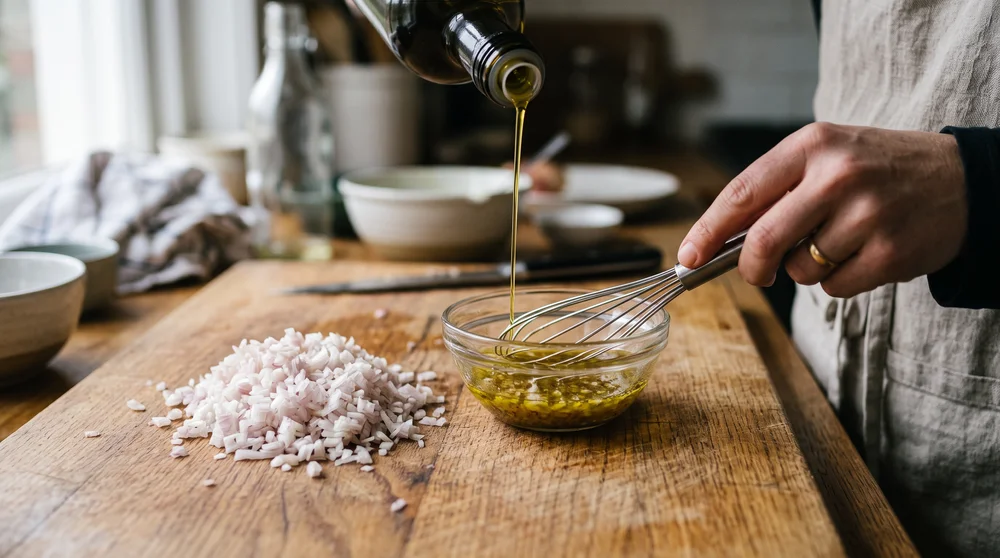
If a recipe calls for raw shallots in a vinaigrette, throwing in raw yellow onion will completely overpower your delicate greens. You can easily fix this with a standard restaurant trick. Finely chop your onion and drop it into a bowl of ice water.
Soaking raw onions in ice water for 10 minutes neutralizes the harsh sulfur compounds, making them a safe stand-in for mild shallots. Drain them well before adding them to your dressing.
Swapping in Cooked Dishes (Pan Sauces vs. Roasting)
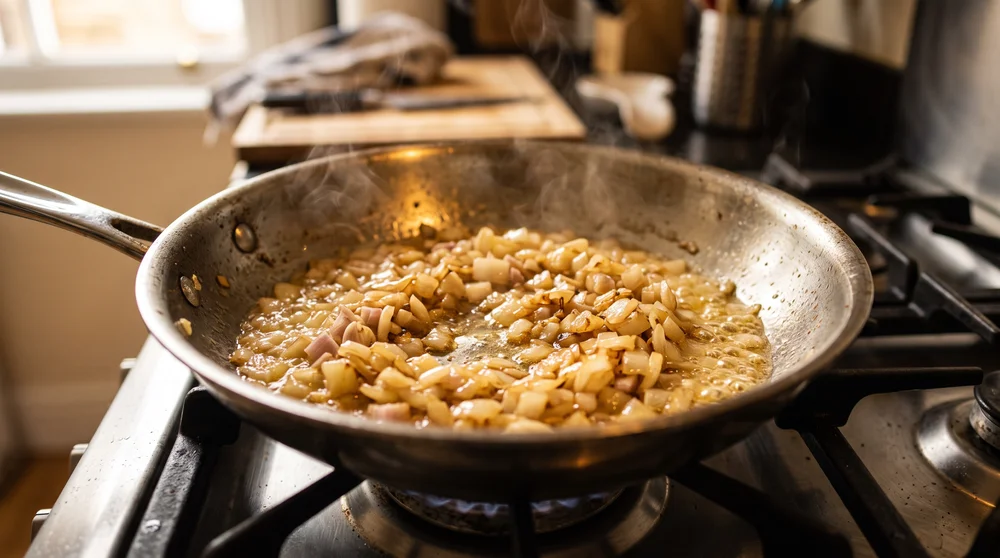
Heat levels the playing field. Both of these vegetables turn sweet and savory when sauteed or roasted. If you are building a soup base or a stir-fry, swapping them is practically foolproof. You just need to remember that thicker onion pieces need slightly more time in the pan to achieve the same soft, jammy texture.
You must cook diced onions for an extra two to three minutes to match the tender texture of a minced shallot.
The Exact Substitution Ratio
Size is the biggest hurdle when swapping these ingredients on the fly. A standard shallot is tiny compared to a robust yellow onion. If you try to swap them bulb-for-bulb, you will severely unbalance your recipe.
Substitute one medium onion for every three standard shallots requested in a cooked recipe.
When You Should Never Make the Swap
Sometimes the shallot is the actual star of the show. If you are making a classic French dish like whole roasted shallots or a savory shallot tarte tatin, leave the onions in the pantry. Onions carry far more water weight and will turn mushy in recipes designed to highlight the tight, structural integrity of whole shallot cloves.
Never substitute onions in recipes where whole or halved shallots are meant to be served intact as a standalone side dish.
Why Are Shallots So Expensive?
You have probably noticed the price difference at the grocery store. This comes down to both farming mechanics and nutritional density. Because shallots grow in tight clusters rather than single, uniform bulbs, they are far more delicate. They typically require careful hand-harvesting, which drives up the cost significantly.
They also pack a much heavier nutritional punch per serving.
| Nutrient (per 100g raw) | Shallots | Onions |
|---|---|---|
| Calories | 72 | 40 |
| Protein | 2.5g | 1.1g |
| Carbohydrates | 16.8g | 9.3g |
| Dietary Fiber | 3.2g | 1.7g |
| Vitamin B6 | 20% DV | 7% DV |
| Manganese | 13% DV | 6% DV |
Shallots cost more because their clustered structure requires labor-intensive hand harvesting, but they reward you with a denser concentration of culinary flavor and vital nutrients.
Keep a few shallots in your pantry for bright dressings and quick, elegant pan sauces. For hearty everyday soups and slow roasts, your trusty yellow onion will always get the job done beautifully.