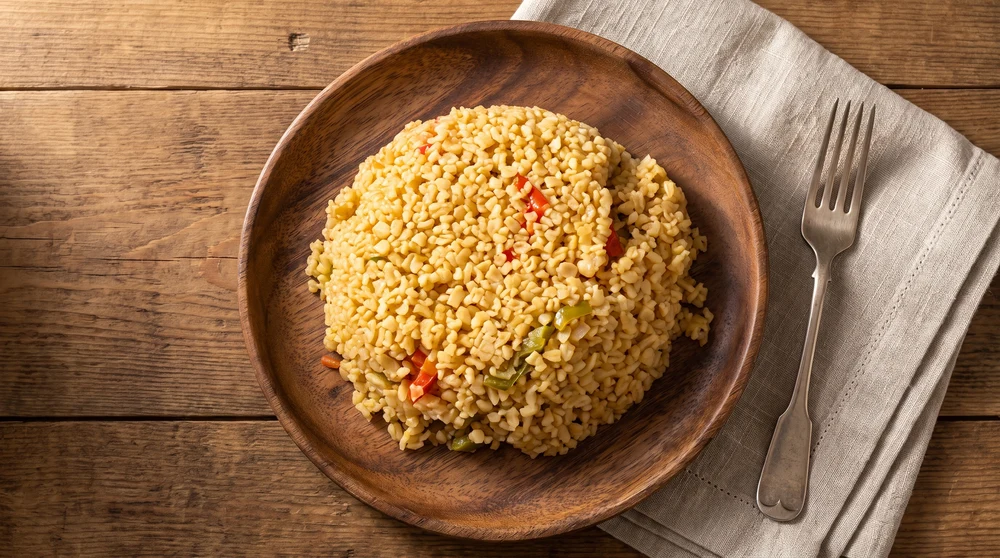
Grab your coarse bulgur and that measured chicken broth, because they are the real stars of this pilaf. You'll want to get the peppers and aromatics nice and soft first, let the grains toast in that savory oil for a minute, and then pour in your warm broth. Pop the lid on, turn the heat way down, and resist the temptation to peek while it absorbs all that flavor.
The golden ratio here is right around 1 part bulgur to 1.75 parts liquid by volume. Once the timer dings, kill the heat and slide a clean paper towel right beneath the lid so trapped condensation won't drip back down. Give it a gentle fluff before bringing it to the table, and you're good to go.