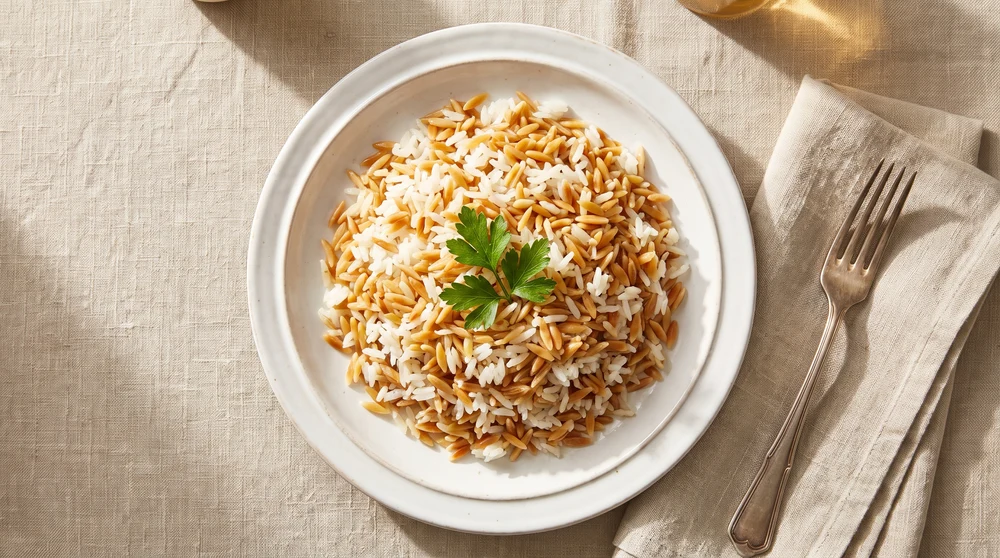
Make sure you rinse your rice really well before you start, which gets rid of all that extra surface starch so things don't get gummy. Then, brown the orzo in butter until it smells nutty and looks golden, keeping things moving so it doesn't scorch, before stirring in the rice and hot stock. Once that's bubbling, just keep the lid on tight and let it simmer gently.
After the liquid cooks off, give the pilaf a little breathing room off the burner before you dive in with a fork. That quick resting period lets the grains finish steaming properly so they separate with zero hassle. Plus, the toasted orzo brings this lovely warmth that pairs brilliantly with roasted chicken or any dish featuring a rich, saucy gravy.