 Chop&Savor®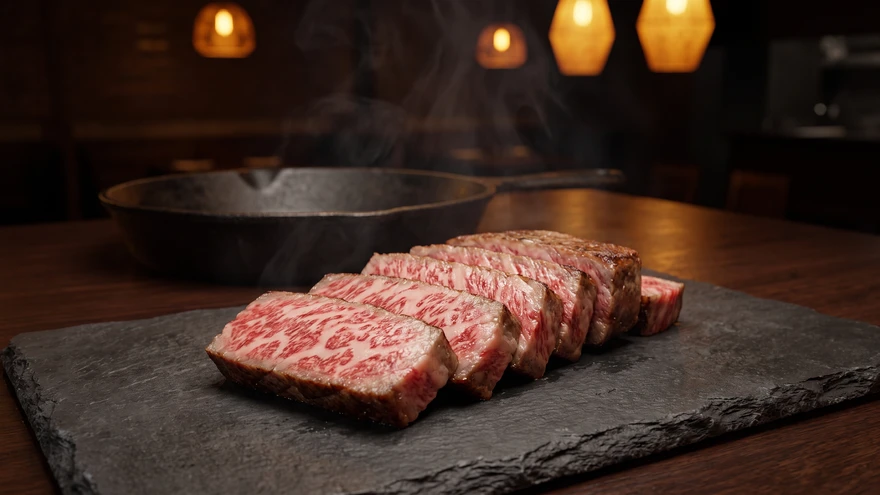
Standing at the butcher counter looking at a $150 piece of steak can make anyone question their sanity. You are likely wondering if that heavily marbled slab of meat is actually worth a car payment, or if you are just paying for clever marketing.
- Origin: Strictly regulated Japanese cattle breeds.
- Average Price: $50 to $250+ per pound depending on the cut and grade.
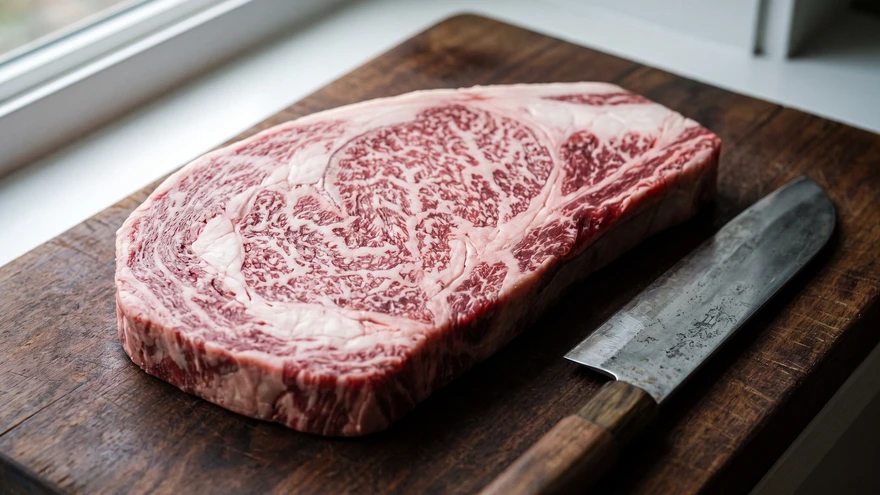
- Visual Trait: Intense, web-like white intramuscular fat (marbling).
- Key Fact: Japan declared these cattle a national treasure in 1997, banning all live exports.
The Economics of Wagyu: Why You Pay $150+ Per Pound
Conventional cattle hit the processing facility after about 120 days on a feedlot. Wagyu cattle live a life of extreme luxury and meticulous care for over 600 days. Farmers feed them highly specialized, imported diets across three daily meals to slowly build up that signature fat.
Japan completely banned the export of live Wagyu cattle in 1997 after declaring them a national treasure. This means the global supply of pure Japanese Wagyu is locked tightly inside a country with very little agricultural land. You are paying for years of intensive labor and profound international scarcity.
Decoding the Labels: Japanese Wagyu vs. American vs. Kobe
The word Wagyu translates directly to Japanese cow, but the global meat industry plays loose with that definition. True Japanese Wagyu comes from four specific domestic breeds with strictly controlled genetic lineages.
American Wagyu is an entirely different product. US ranchers typically crossbreed descendants of the few Japanese cows exported before the 1997 ban with standard Angus cattle. This crossbreed yields a steak with more fat than a prime USDA ribeye, but it lacks the overwhelming richness of the Japanese original.
Kobe beef is simply a highly exclusive, geographically protected brand of Japanese Wagyu from the Hyogo Prefecture. All Kobe is Wagyu, but only a tiny fraction of Wagyu qualifies as Kobe.
How to Spot "Fake" Wagyu at the Supermarket
Restaurants and grocery stores constantly use deceptive labeling to charge premium prices for average meat. The phrase "Kobe-style" on a burger menu or meat package is the biggest red flag in the culinary world. It almost always means the meat has zero connection to Japan.
Real Japanese Wagyu always carries a certificate of authenticity detailing the cow's nose print and exact farm origin. Look for the Beef Marbling Standard (BMS) rating on the packaging. Authentic, high-end Japanese cuts will proudly display an A4 or A5 grade, while American crossbreeds rely on vague marketing terms like "gold" or "black" labels.
The Fat Factor: Why Real Wagyu Melts in Your Mouth
That webbing of white fat across the steak is nothing like the chewy gristle on a standard sirloin. Wagyu fat is packed with oleic acid, the exact same heart-healthy fatty acid found in high-quality olive oil.
This unique chemical composition drastically lowers the melting point of the fat. The marbling literally begins to dissolve at room temperature. When this meat hits your tongue, the structure breaks down instantly and coats your palate in a rich, buttery broth.
How to Cook Wagyu at Home (Without Ruining It)
Treating an A5 Wagyu ribeye like a standard backyard grilling steak will result in an expensive grease fire. The delicate fat melts completely through standard grill grates, causing massive flare-ups. You need a heavy cast iron skillet to capture all of that rendering fat and build a perfect crust.
- Slice the steak into thin, one-inch strips rather than serving massive individual portions.
- Skip the cooking oil and butter completely. Rub the cold pan with a small piece of trimmed fat from the edges of the steak to naturally grease the surface.
- Get the skillet screaming hot and sear each strip for barely 60 seconds per side.
- Season strictly with flaky sea salt after cooking to let the pure beef flavor shine.
Taking the meat out of the pan slightly early ensures you keep that luxurious texture intact. You can confidently serve this showstopper at your next dinner party without second-guessing your technique.