
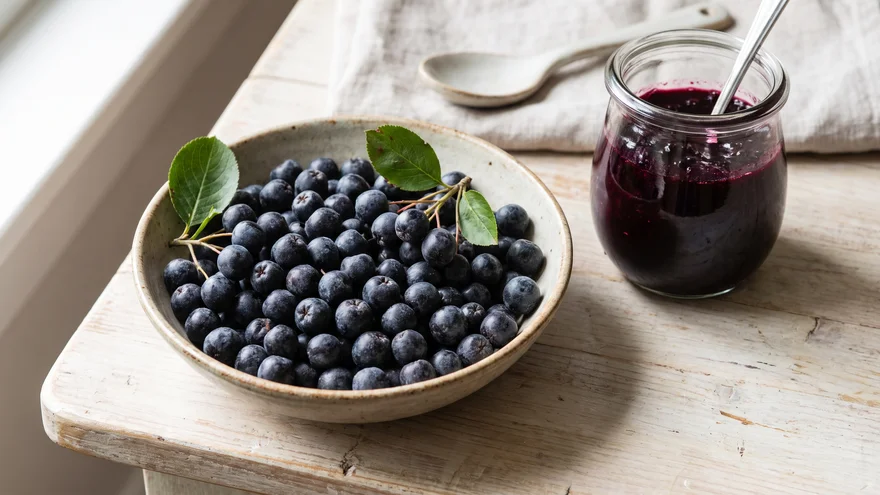
Raw aronia berries have a sharp, astringent taste that can leave your mouth feeling dry. Cook them with sugar, and their deep, tart flavor comes through, somewhere between blackberry and cranberry. Once you know how to balance their tannins, they work well in jams, baked goods, and syrups.
- Raw flavor: Very tart and mouth-puckering, with a dry finish.
- Cooked flavor: Bold and earthy, much like unsweetened cranberries or blackcurrants.
- Best kitchen uses: Compotes, syrups, muffins, and smoothies.
- Key pairing rule: Balance the tannins with a sweetener such as honey or maple syrup, or a creamy base such as yogurt.
What Do Aronia Berries (Chokeberries) Actually Taste Like?
It depends on whether you eat them raw or cooked. A fresh berry starts with an earthy tartness, then quickly leaves a chalky, dry feeling in your mouth.
Cooking aronia with sugar softens that harsh edge. Freezing may make the berries a little less astringent, too. Their flavor becomes closer to tart black cherry or dark, unsweetened cranberry. The earthiness remains, giving them enough depth to stand up to strong spices and rich sweeteners.
Why Do They Make Your Mouth Feel Dry? (The Tannin Effect)
That mouth-puckering feeling comes from tannins, the same natural plant compounds that give strong black tea and dry red wine their rough, drying feel.
Tannins bind to proteins in your saliva, temporarily reducing the moisture you feel in your mouth. That reaction is how the berries got the nickname "chokeberries."
Chokeberry vs. Chokecherry: Are They the Same?
Despite their similar names, they come from different plants. Black chokeberry, Aronia melanocarpa, grows in small clusters and has tiny seeds that are barely noticeable, much like a blueberry’s.
Chokecherry (Prunus virginiana) is a stone fruit with a hard pit, like a small cherry. Always identify foraged fruit before using it. Chokecherry seeds, leaves, and stems should not be eaten.
Fresh, Frozen, Dried, or Powder: Which Should You Use?
Each form works a little differently in the kitchen. Choose one that suits your recipe:
| Form | Kitchen Behavior | Best Used For |
|---|---|---|
| Fresh | Very astringent and full of moisture; takes time to break down. | Jams, compotes, and homemade syrups. |
| Frozen | Softer once thawed and possibly a little less astringent, but still tart. | Smoothies, oatmeal, or baking straight from frozen. |
| Dried | Chewy, with a concentrated flavor and a texture similar to raisins. | Trail mix, granola, or bread dough. |
| Powder | Ground dried fruit that disperses in liquid rather than dissolving. | Smoothies or replacing a small portion of flour in baking. |
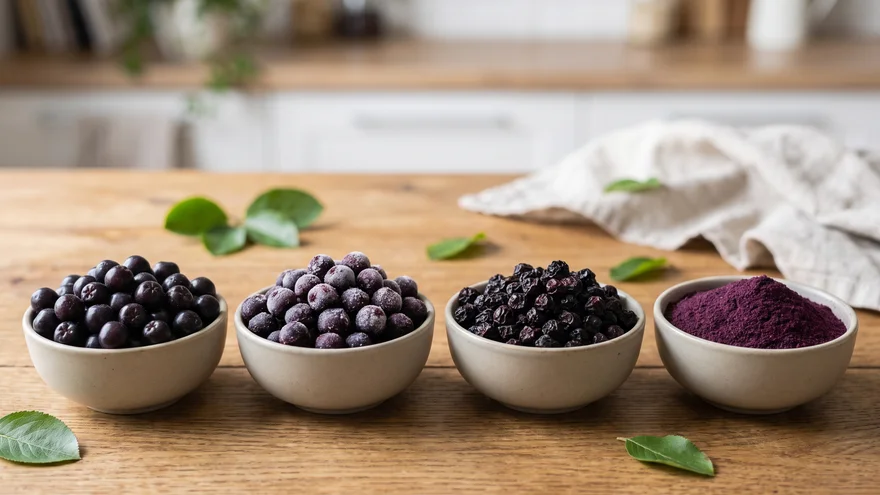
Fresh and frozen berries add moisture to a dish; dried berries and powder do not.
How to Balance the Tartness in Everyday Recipes
Aronia is much more astringent than a sweet summer strawberry, so a little balance helps when you use it in everyday meals.
- Add a little acid: A splash of lemon juice brightens the earthy flavor, though it won’t remove the tannins.
- Sweeten to taste: Honey, maple syrup, or cane sugar rounds out the berry’s sharpness and brings out its fruitiness.
- Mix with sweeter fruit: Apples add sweetness and pectin. Combine chopped apples and aronia for a pie filling or jam base, then adjust the proportions and sweetness to taste.
Best Ways to Use Aronia Berries in the Kitchen
Compotes, Jams, and Syrups (Best for Fresh/Frozen)
Heat helps soften aronia’s tough skins. Simmer fresh or frozen berries with water, a sweetener, and a cinnamon stick to make a rich, dark purple syrup or compote.
Spoon it over vanilla ice cream, stir it into yogurt, or turn it into a glaze for roasted meat such as pork tenderloin. Its tartness works well with the richness of the meat.
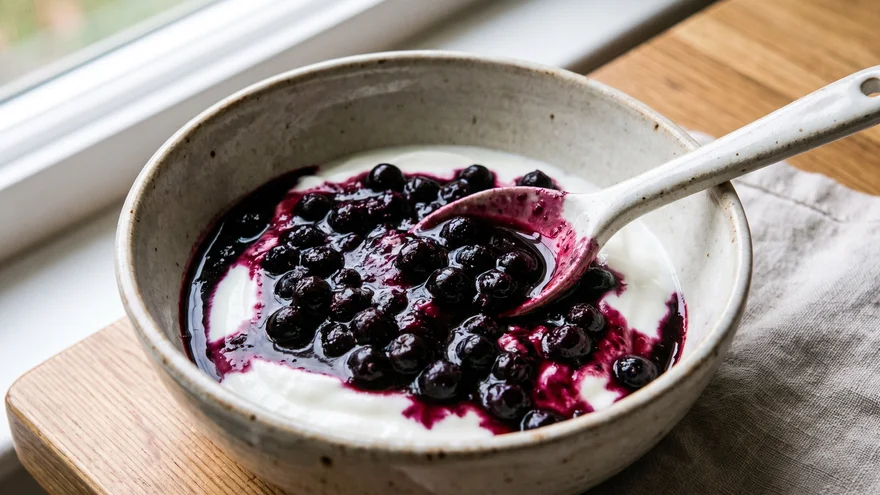
A small spoonful is also good over plain yogurt or oatmeal.
Baking (Muffins, Breads, and Oats)
Dried aronia berries can stand in for dried cranberries or raisins in many baking recipes. They keep their shape and add a chewy, tart bite to sweet doughs.
For aronia powder, start with a small spoonful mixed into the dry flour. It turns batter deep purple and may change its moisture and crumb, so try a small batch first.
Smoothies and Beverages
Frozen berries and aronia powder blend well into smoothies. Pair them with banana, almond milk, or Greek yogurt for a creamy base.
Proteins in milk or yogurt can bind to tannins and ease the dry feeling in your mouth, though they won’t eliminate it entirely.
Flavor Pairings: What Goes Well with Aronia?
These ingredients help balance aronia’s flavor:
- Citrus: Lemon juice and orange peel brighten its earthy taste.
- Warm spices: Cinnamon, ground ginger, and vanilla extract complement its earthy notes.
- Sweet fruits: Apples, bananas, and pears add sweetness to balance the astringency.
- Savory ingredients: Balsamic vinegar, thyme, and hard cheeses go well with savory aronia jellies.
A Note on Nutrition (Skip the Superfood Hype)
You may see aronia described online as a medical miracle, but the evidence doesn’t support that claim.
Aronia contains polyphenols, but a 2025 Nutrients meta-analysis of ten randomized trials found no significant overall cardiometabolic benefits, and the certainty of the evidence was very low. Don’t count on the berries to treat high blood pressure or lower cholesterol. Use them as an ingredient, not a medicine.
How to Store Aronia Berries (Fresh and Dried)
Keep fresh berries dry in your fridge’s crisper drawer. Wash them only when you’re ready to use them, and discard any with signs of mold or spoilage.
If you have a large harvest, freeze the berries. Spread them on a baking sheet, freeze until solid, then transfer them to an airtight, freezer-safe bag. Label it with the date, since quality declines over time. Store dried berries and powder in airtight glass jars in a cool, dark pantry to keep moisture out.